-(1).png)


Professional cleaning tools and how to use them at home: the complete guide to results like the experts
When you walk into a space that has been professionally cleaned, the difference is immediately noticeable. The surfaces shine differently, the air smells fresher, and there is an overall sense of order that seems difficult to replicate. What most homeowners do not realize is that this level of cleanliness is not about spending more time scrubbing harder. It is about using the right tools with the correct techniques.
When you walk into a space that has been professionally cleaned, the difference is immediately noticeable. The surfaces shine differently, the air smells fresher, and there is an overall sense of order that seems difficult to replicate. What most homeowners do not realize is that this level of cleanliness is not about spending more time scrubbing harder. It is about using the right tools with the correct techniques.
Professional cleaners rely on specialized equipment designed for efficiency, durability, and superior results. These tools are not exclusive to commercial cleaning companies. With the proper knowledge, any homeowner can access and master these instruments to transform their living spaces.
This comprehensive guide breaks down the essential tools used by industry professionals and provides practical instructions for implementing them in your daily cleaning routine.
The cleaning industry has evolved significantly over the past decade. Innovations in materials science, ergonomic design, and chemical formulations have produced tools that make cleaning faster, more effective, and less physically demanding. Understanding these advancements allows you to make informed investments in your home maintenance arsenal rather than accumulating ineffective gadgets that clutter your storage spaces.
The philosophy behind professional cleaning equipment
Professional cleaners approach their work with a systematic mindset that prioritizes efficiency and consistency. Every tool in their kit serves a specific purpose and is chosen based on performance metrics rather than marketing claims. This disciplined approach to equipment selection is the first lesson homeowners should adopt.
The distinction between consumer-grade and professional-grade cleaning tools often lies in construction quality and design specificity. Professional tools are built to withstand daily use in demanding environments. They feature reinforced components, replaceable parts, and ergonomic designs that reduce strain during extended use. While the initial investment may be higher, the longevity and performance justify the cost over time.
Another critical aspect is the specialization of function. Professional cleaners do not use multipurpose tools that attempt to do everything adequately. Instead, they maintain a diverse collection of instruments, each optimized for particular surfaces, soil types, or spatial configurations. This specialization ensures optimal results without risking damage to delicate materials through inappropriate tool selection.
Join your neighbors who have already discovered the BKCC difference. We are proud to serve our local community with reliable, thorough cleaning services that respect your home and your time. Whether you need weekly maintenance, seasonal deep cleaning, or preparation for special events, our flexible scheduling accommodates your lifestyle.
Microfiber technology: the foundation of modern cleaning
Microfiber cloths and mops represent perhaps the most significant advancement in cleaning technology available to consumers today. These synthetic fibers, typically composed of polyester and polyamide, are split during manufacturing to create microscopic hooks that capture dust, dirt, and bacteria mechanically rather than just pushing them around.
Professional cleaners utilize microfiber in various configurations depending on the task. Waffle-weave microfiber towels excel at absorbing liquids and are ideal for drying surfaces or cleaning windows without streaking. Plush, high-pile microfiber cloths trap dust and allergens effectively, making them perfect for dusting furniture and electronics. Flat microfiber mop pads, used with a spray bottle or pump sprayer, allow for controlled moisture application on hard floors.
The key to maximizing microfiber performance lies in proper usage and maintenance. When dusting, fold the cloth into quarters and use one section at a time, rotating to a clean surface as it becomes saturated. For wet cleaning, dampen the cloth slightly rather than soaking it, as excessive moisture reduces the electrostatic properties that make microfiber effective.
Wash microfiber separately from other laundry using mild detergent without fabric softener, which coats the fibers and diminishes their cleaning ability.
-(1)-0326181824.png)
High-quality microfiber cloths feature split fibers that create microscopic hooks, capturing particles mechanically without chemical cleaners. This technology explains why professionals achieve superior results with minimal product use.
Vacuum systems: beyond the household upright
The vacuum cleaner market offers overwhelming variety, but professional cleaners gravitate toward specific configurations that prioritize suction power, filtration efficiency, and versatility. Understanding these preferences helps homeowners make better purchasing decisions.
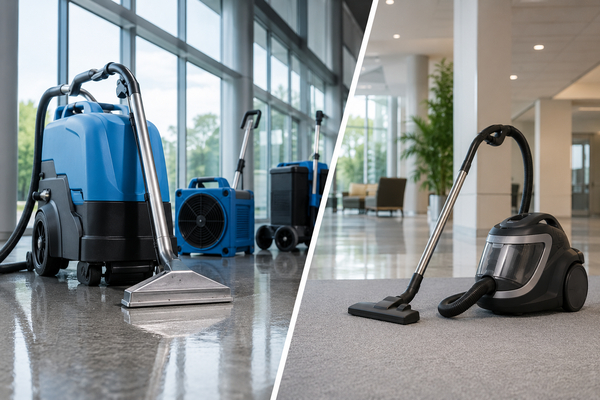
Canister vacuums dominate professional residential cleaning for good reason. Their design separates the motor and collection unit from the cleaning head, allowing for lighter maneuverability and access to tight spaces. The variety of attachments available for canister systems enables effective cleaning of upholstery, draperies, baseboards, and hard floors.
Look for models with HEPA filtration to capture fine particles and improve indoor air quality.
Backpack vacuums represent another professional standard, particularly for commercial applications. These systems distribute weight across the shoulders and back, reducing fatigue during extended use. They offer exceptional mobility for cleaning large areas quickly and staircases safely. While initially developed for commercial use, backpack vacuum systems are increasingly available in consumer configurations.
For hard surface floors, professional cleaners often prefer vacuums with dedicated hard floor heads or the ability to turn off the brush roll completely. Rotating brushes designed for carpet can scatter debris on hard surfaces and potentially scratch delicate flooring. The best approach is thorough vacuuming before any wet cleaning, removing loose soil that would
otherwise become mud when mixed with cleaning solutions.
Schedule your consultation today and discover how BKCC brings commercial-grade equipment and expertise to your residential space. Our team uses the exact tools described in this guide, combined with years of experience, to deliver results that exceed typical household cleaning standards.
Vacuum type | Best application | Main advantages | Household considerations |
|---|---|---|---|
Canister vacuum | Hard floors, furniture, curtains | Attachment versatility, HEPA filtration | Requires storage space |
Backpack vacuum | Large areas, stairs | Superior mobility, reduces fatigue | Initial learning curve |
Lightweight upright vacuum | Quick daily maintenance | Convenience, easy access | Lower suction power |
Robotic vacuum | Scheduled maintenance | Automation, frequent cleaning | Does not replace deep cleaning |
This table illustrates that no single system satisfies all needs. Professionals typically maintain multiple configurations for different contexts, while households may prioritize based on their predominant floor type and lifestyle.
Chemical selection: professional formulations and safe alternatives
Professional cleaners understand that chemical selection is as important as mechanical action. The cleaning industry offers formulations designed for specific soil types and surface materials, ranging from alkaline degreasers to acidic descalers and neutral pH maintenance cleaners.
All-purpose cleaners serve as the workhorse for general surface cleaning, but professionals recognize their limitations.
Heavy grease requires alkaline formulations that break down oils effectively. Soap scum and mineral deposits respond to acidic cleaners that dissolve these specific deposits. Using the wrong chemistry results in wasted effort and potential surface damage.
For homeowners seeking to minimize chemical use, professionals recommend understanding the cleaning power of pH-neutral options and mechanical action. Many tasks traditionally approached with strong chemicals can be accomplished effectively with properly diluted neutral cleaners and adequate dwell time. The key is allowing cleaning solutions to sit on surfaces for several minutes to break down soils before wiping, rather than spraying and immediately removing.
Enzymatic cleaners represent a professional-grade option increasingly available to consumers. These formulations use biological catalysts to break down organic stains and odors from sources like pet accidents, food spills, and biological matter. Unlike masking agents that cover odors temporarily, enzymatic cleaners digest the source of smells, providing permanent resolution when used correctly.
-(1)-0326181500.png)
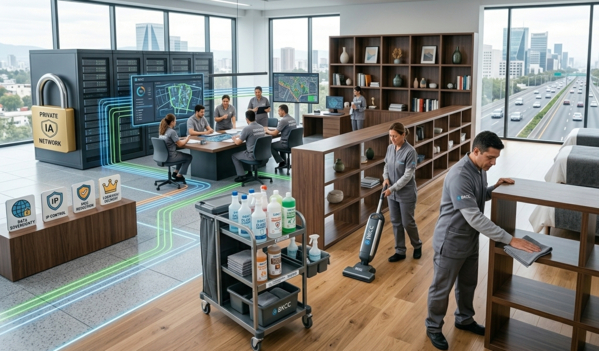
Professional cleaning carts feature color-coded chemical systems that prevent cross-contamination between different areas. This organizational principle can be adapted for home use to improve efficiency and safety.
Specialized tools for specific challenges
Beyond the basics, professional cleaners employ specialized tools that address common cleaning challenges more effectively than general-purpose alternatives.
Squeegees with rubber blades are essential for streak-free window and mirror cleaning. The technique involves applying cleaning solution, agitating with a scrubber or sponge, and then pulling the squeegee in overlapping strokes from top to bottom. This method removes solution completely rather than spreading it thinly, which causes streaking as it dries.
Extension poles transform basic tools into versatile systems for high-reach cleaning. Professional-grade poles accept various attachments including dusters, window washing tools, and even specialized mop heads. This adaptability eliminates the need for ladders in many situations, improving safety and efficiency.
Detail brushes with stiff nylon bristles address grout lines, track systems, and textured surfaces where soil accumulates. These tools provide mechanical agitation in tight spaces where cloths and sponges cannot reach effectively. For electronic devices and delicate mechanisms, softer detailing brushes prevent damage while removing dust and debris.
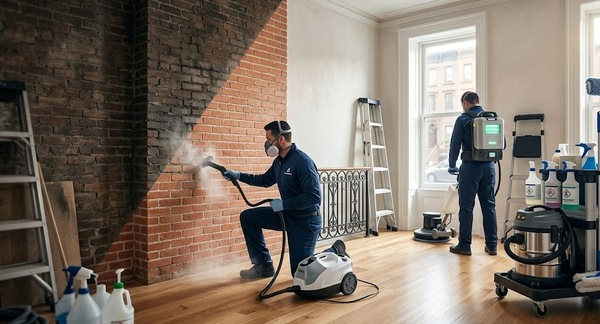
Steam cleaning equipment has become increasingly accessible to consumers while remaining a staple of professional services. These systems use heated water vapor to sanitize surfaces without chemicals, making them ideal for households with sensitivities or environmental concerns. However, professionals caution that steam is not appropriate for all surfaces, particularly heat-sensitive materials or unsealed wood.
Specialized tool | Problem it solves | Key professional technique | Recommended frequency |
|---|---|---|---|
Squeegee | Foggy windows and mirrors | Top-to-bottom overlapping strokes | Weekly |
Detail brushes (various sizes) | Grout, tracks, tight spaces | Mechanical agitation before wiping | As needed |
Steam cleaner | Chemical-free disinfection | Slow movement for effective heat | Monthly |
Lint/pill remover | Textiles, upholstery | Gentle shaving technique | Quarterly |
Telescopic extension pole | High areas, ceilings | Quick-change attachment system | Monthly |
Adopting these specialized tools transforms frustrating tasks into manageable processes. The initial investment pays off quickly through surface preservation and a reduction in time spent cleaning.
Systematic approaches: the professional cleaning method
Tools alone do not produce professional results. The methodology employed is equally important. Professional cleaners work systematically to ensure thoroughness and efficiency, following patterns that prevent recontamination of cleaned areas.
The top-to-bottom, back-to-front principle guides professional cleaning sequences. Starting with ceiling fixtures, crown molding, and upper shelving prevents dust and debris from falling onto already-cleaned lower surfaces. Working from the back of a room toward the entrance ensures that footsteps do not soil freshly cleaned floors.
The concept of dry before wet cleaning is fundamental.
Removing loose soil through dusting and vacuuming before introducing moisture prevents the creation of muddy residues that are harder to remove. This sequence also protects cleaning cloths and mop pads from becoming prematurely saturated with dry soil.
Color coding prevents cross-contamination between different areas of the home. Professional services typically use red for high-risk areas like bathrooms, blue for general living spaces, green for kitchens, and yellow for specialty applications. Implementing a simplified version of this system at home improves hygiene outcomes, particularly in kitchens and bathrooms.
-(2)-0326181054.png)
Professional cleaners follow systematic patterns that prevent recontamination. Working from top to bottom and back to front ensures that dislodged debris falls only onto surfaces yet to be cleaned.
Maintenance and care of professional tools
Investment in quality cleaning tools requires corresponding attention to maintenance. Professional equipment lasts for years because it receives proper care after each use.
Microfiber cloths should be washed after each use to prevent bacterial growth and maintain effectiveness. Avoid washing with cotton items that produce lint, and never use bleach or fabric softener. Air drying preserves fiber integrity longer than machine drying, though low-heat tumble drying is acceptable.
Vacuum cleaners require regular filter maintenance and brush roll cleaning. Clogged filters reduce suction power significantly, while hair and fiber wrapped around brush rolls impair rotation and can damage bearings. Check and clean these components monthly for optimal performance.
Extension poles and mechanical tools benefit from occasional lubrication of moving parts and inspection for wear. Rubber squeegee blades should be replaced when they develop nicks or lose flexibility, as damaged blades cause streaking regardless of technique.
Chemical sprayers and pump bottles require thorough rinsing after use to prevent nozzle clogging and chemical degradation. Store cleaning solutions in cool, dark places to maintain potency, and never mix different chemicals in the same container due to potential dangerous reactions.
Equipment | Daily maintenance | Weekly maintenance | Monthly maintenance |
|---|---|---|---|
Microfiber cloths | Rinse after use | Full wash | Wear and tear inspection |
Vacuum cleaner | Empty bag/canister | Filter cleaning | Brush and hose inspection |
Mops | Rinse and dry | Deep cleaning | Pad replacement if necessary |
Spray systems | Nozzle rinsing | Full tank cleaning | Seal and trigger inspection |
Brushes | Debris removal | Soap and water wash | Damaged bristle check |
Following this schedule ensures that tools maintain their peak performance and their lifespan is significantly extended, protecting the initial investment.
Building community through shared knowledge
The cleaning community, both professional and enthusiast, thrives on knowledge sharing. Local cleaning groups, online forums, and social media communities provide spaces where individuals exchange product recommendations, technique refinements, and support for challenging cleaning situations.
Engaging with your local community around cleaning knowledge creates connections that extend beyond the practical aspects of home maintenance. Neighborhood groups often organize tool-sharing cooperatives, bulk purchasing arrangements for professional-grade supplies, and skill-sharing workshops where experienced cleaners demonstrate techniques.
For those in the local area seeking to elevate their home cleaning practices, connecting with professional services provides opportunities to observe expert techniques firsthand. Many cleaning professionals are willing to share knowledge during service visits, explaining their tool choices and methods to interested homeowners.
Ready to experience professional results without the effort?
While mastering professional tools and techniques can transform your home maintenance routine, sometimes the demands of modern life leave little time for deep cleaning. That is where professional services make the difference.
Book your first appointment now and receive a complimentary assessment of your home's specific cleaning needs. We will identify the high-traffic areas, delicate surfaces, and specialized requirements that make your space unique, then customize our approach accordingly. Experience what professional cleaning truly means when performed by neighbors who care about your community.
-
-
-
-
-
-
Sources and References
CleanLink. Professional Cleaning Equipment Trends 2024. Disponible en: https://www.cleanlink.com
ISSA. The Value of Clean: Implications for Hospitality and Healthcare. Disponible en: https://www.issa.com
Building Service Contractors Association International. Best Practices in Commercial Cleaning. Disponible en: https://www.bscai.org
American Cleaning Institute. Cleaning Product Chemistry Guide. Disponible en: https://www.cleaninginstitute.org
Microfiber Wholesale. Professional Microfiber Cleaning Guide. Disponible en: https://www.microfiberwholesale.com
Cleanfax Magazine. Equipment Maintenance Protocols for Cleaning Professionals. Disponible en: https://www.cleanfax.com
Comment