-(1).png)

Brooklyn home cleaning: the equipment categories that separate professionals from amateurs
In the first part of our exploration into the science of professional cleaning, we examined why the equipment used by trained technicians fundamentally differs from consumer grade alternatives available to homeowners. We established that professional tools deliver superior results not merely through greater power, but through engineered precision that protects surfaces while eliminating contaminants.
This second installment delves deeper into the specific equipment categories that define professional cleaning standards, explaining the technical specifications that matter for Brooklyn's distinctive housing stock. From pre war brownstones with original hardwood to modern condominiums with engineered surfaces, understanding these standards empowers homeowners to evaluate cleaning services effectively and make informed decisions about their property maintenance investments.
The five equipment categories that define professional standards. Professional cleaning operations rely on five distinct equipment categories, each addressing specific surface types and contamination challenges. Understanding these categories helps homeowners recognize when a service truly invests in capability or merely claims professional status without the tools to deliver.
Category one: high performance particulate removal systems
The first category encompasses high performance particulate removal systems, commonly known as HEPA filtration vacuums. While many consumer vacuums claim HEPA compatibility, genuine professional units capture 99.97 percent of particles down to 0.3 microns, including pollen, dust mite feces, pet dander, and fine particulate matter that penetrates deep into respiratory systems. Professional units maintain this efficiency through sealed systems that prevent bypass airflow, a feature rarely found in residential equipment regardless of price point.
According to the Environmental Protection Agency, a true HEPA vacuum must be designed so that all the air drawn into the machine is expelled through the HEPA filter with none of the air leaking past it. The EPA specifically warns that a vacuum retrofitted with a HEPA filter is not necessarily properly sealed or designed so that all of the intake air goes through the HEPA filter. Renovation firms should look for a vacuum cleaner that was designed to be operated with a HEPA filter, rather than a shop vacuum that can be fitted with a HEPA filter in place of the original basic filter.
For Brooklyn homeowners, this distinction matters because the borough's aging housing stock often contains lead paint, asbestos in older buildings, and high levels of street pollution that settle indoors. A professional HEPA vacuum does not just move dust around; it removes it permanently from the environment. The IICRC S520 Standard requires HEPA filtration for all mold remediation vacuuming, establishing this as a non negotiable baseline for any service claiming professional status.
Category two: hot water extraction systems for soft flooring
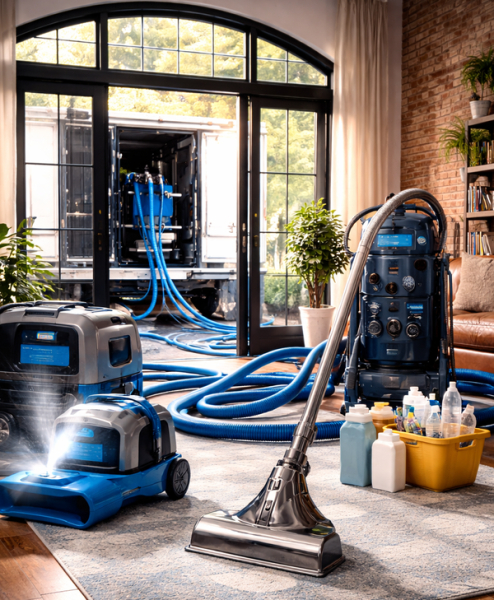
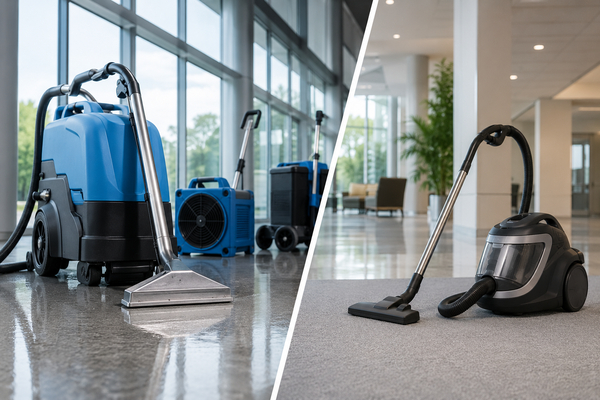
The second critical category covers hot water extraction systems for carpet and upholstery cleaning. This method, often incorrectly called steam cleaning, involves injecting heated cleaning solution into carpet fibers and immediately extracting it along with dissolved soils. According to IICRC S100 standards, properly performed hot water extraction removes up to 97 percent of soils.
Professional extraction systems operate at 100 to 400 PSI with water temperatures between 120 and 200 degrees Fahrenheit. This combination of heat and pressure breaks down oily soils common in high traffic areas while powerful vacuum recovery extracts contaminated water and debris before it resettles. Commercial grade portable extractors feature 15 gallon tanks, dual vacuum motors around 1000W each, and automatic pump out systems that home grade units simply cannot match.
The distinction between adequate cleaning and exceptional cleaning often lies in equipment specifications that consumers rarely consider. Vacuum suction power, water temperature control, extraction pressure, filtration efficiency, and chemical compatibility all determine whether a cleaning process removes contaminants or merely redistributes them. For families concerned with allergies, asthma, or immune sensitivities, these technical differences translate directly to quality of life outcomes.
Research indicates that commercial carpets accumulate 1 to 2 pounds of dirt per 100 square feet annually, making periodic deep cleaning essential for both appearance and durability . In Brooklyn, where many apartments combine original hardwood with area rugs or wall to wall carpeting in bedrooms, professional extraction equipment becomes essential for maintaining indoor air quality.
Category three: hard floor scrubbing and restoration machines
The third category addresses hard floor cleaning through mechanical scrubbing systems. Brooklyn's housing stock includes pre war hardwood, terrazzo in art deco buildings, ceramic tile in bathrooms and kitchens, and modern engineered surfaces in new developments. Each surface requires specific equipment configurations to clean effectively without damage.
Professional floor scrubbers come in multiple configurations. Walk behind scrubbers are ideal for small to medium spaces like apartments and brownstone floors, with cleaning paths ranging from 12 to 34 inches and tank capacities from 1 to 30 gallons. Ride on scrubbers handle larger commercial spaces and common areas in condominium buildings, with cleaning paths over 24 inches and tank capacities exceeding 100 gallons.
The critical specification is brush type. Disc brush heads work best on smooth floors for routine cleaning and lighter soiling, particularly in noise sensitive areas like hospitals and hotels. Cylindrical roller brushes create up to 10 times more down pressure for deeper cleaning of structured and heavily soiled floors, and their counter rotating rollers absorb coarse dirt particles that disc brushes would simply push around.
For Brooklyn homeowners, this means that a service using the wrong brush type on original hardwood could damage the finish, while using insufficient pressure on terrazzo would leave ground in dirt from decades of foot traffic. Professional technicians select equipment based on surface composition, soil level, and the specific challenges of urban environments where street grit and pollution create unique contamination profiles.
Category four: low moisture and encapsulation systems
The fourth category covers low moisture cleaning methods, particularly encapsulation systems for carpet maintenance between deep extraction cleanings. This method uses specialized machines with counter rotating brushes or orbital action to apply a polymer based cleaning agent that crystallizes around soil particles, which are then removed through dry vacuuming.
Encapsulation machines are essential for commercial spaces with high traffic that cannot tolerate the 4 to 12 hour drying times required by hot water extraction. In Brooklyn, where many residents work from home and cannot vacate their apartments for extended drying periods, low moisture methods provide a viable intermediate solution.
However, encapsulation is not a replacement for deep extraction. It addresses surface soils and maintains appearance between restorative cleanings, but it does not remove the deep seated allergens, bacteria, and particulate matter that accumulate in carpet padding and backing. Professional services use encapsulation as part of a maintenance program, not as a standalone solution, and homeowners should be wary of any service that presents low moisture methods as equivalent to hot water extraction.
Category five: air quality and environmental control equipment
The fifth and final category encompasses air quality and environmental control equipment, including air scrubbers, industrial blowers, and moisture control systems. These tools address the environmental conditions created during and after cleaning, rather than the cleaning process itself.
Air scrubbers attach directly to HVAC ductwork or operate as standalone units, removing airborne pollution and contaminants to improve indoor air quality. During carpet extraction or floor scrubbing, these machines capture particles that become airborne during the cleaning process, preventing them from resettling on freshly cleaned surfaces. Industrial blower fans speed drying times for carpets and hard floors, preventing mold growth and allowing spaces to return to use more quickly.
In Brooklyn's humid summers and heated winter interiors, moisture control is particularly critical. Professional services use hygrometers to monitor humidity levels and deploy air movers strategically to achieve complete drying within manufacturer recommended timeframes. Failure to control moisture can result in mold growth, warping of hardwood floors, and degradation of carpet backing systems.
Professional standards vs consumer grade: what the specifications reveal
The gap between professional and consumer grade equipment is not merely about price or power ratings. It is about design philosophy. Consumer equipment is built for occasional use by untrained operators, with safety features that limit performance to prevent damage by inexperienced users. Professional equipment is built for daily use by trained technicians, with adjustable parameters that allow precise calibration for specific surfaces and soil conditions.
Consider vacuum cleaners. A commercial grade upright vacuum features dual motors allocating power independently to the brush and vacuum, HEPA filtration as standard, and noise levels around 80 dB compared to the 71 dB or less of home grade units. The commercial unit weighs 21.3 pounds versus 3.74 pounds for residential models, reflecting the robust construction necessary for continuous operation.
For carpet extractors, the differences are even more stark. Commercial units operate at 16 to 19 amps versus 12 amps for home grade machines, feature 15 gallon clean tanks versus 1.75 gallons, and include dual vacuum motors with automatic pump out systems that home units lack entirely . These specifications translate directly to cleaning effectiveness: a professional machine can extract deeply embedded soils that a rental unit would simply redistribute.
| Equipment type | Professional grade specification | Consumer grade specification | Impact on cleaning quality |
|---|---|---|---|
| HEPA Vacuum | 99.97% efficiency at 0.3 microns, sealed system | HEPA compatible filter, potential bypass airflow | Professional units remove particles permanently; consumer units may redistribute contaminants |
| Carpet Extractor | 100–400 PSI, 120–200°F, dual vacuum motors, 15 gallon tanks | 12 amps, single motor, 1.75 gallon tanks | Professional units remove 97% of soils; consumer units manage surface cleaning only |
| Floor Scrubber | Adjustable brush pressure, disc or cylindrical options, 24–36 volt systems | Single brush type, limited pressure adjustment | Professional units match brush to surface; consumer units risk damage or ineffective cleaning |
| Encapsulation Machine | Counter rotating brushes, polymer application systems | Not available to consumers | Professional maintenance between deep cleanings; consumers rely solely on extraction or surface cleaning |
| Air Scrubber | HEPA filtration, HVAC integration, standalone operation | Not available to consumers | Professional control of airborne particles during cleaning; consumers have no equivalent capability |
For Brooklyn residents who value their health, their property, and their time, professional grade equipment is not a luxury. It is a necessity. The technical specifications that separate professional from consumer grade tools translate directly to cleaner air, longer lasting surfaces, and healthier living environments.
-19-24-04-0506202411.png)
Why Brooklyn homes demand professional grade equipment
Brooklyn's housing stock presents unique challenges that make professional grade equipment not just preferable but necessary. Pre war brownstones feature original hardwood floors that have survived a century of use but require precise moisture control and pH balanced cleaning solutions to prevent damage. Post war brick buildings often contain asbestos in floor tiles and pipe insulation, requiring HEPA containment during any disturbance. New condominium developments feature engineered surfaces and open floor plans that accumulate dust and allergens across larger continuous areas.
The borough's proximity to industrial areas, major highways, and construction sites means indoor air quality is consistently compromised by fine particulate matter. According to EPA standards, professional HEPA vacuums are required for lead safe renovation practices because they are the only equipment capable of capturing the fine dust created by construction and maintenance activities without redistributing it into the air .
For families with children, elderly residents, or individuals with respiratory conditions, these equipment standards directly impact health outcomes. A consumer grade vacuum may remove visible dust while leaving behind the microscopic particles that trigger asthma attacks or allergic reactions. A rental carpet cleaner may leave carpets damp for 24 hours, creating ideal conditions for mold growth in Brooklyn's humid climate.
The future of cleaning equipment: sustainability and smart technology
The professional cleaning industry is evolving rapidly, with 2026 marking significant advances in both sustainability and smart technology integration. Health first cleaning trends emphasize medical grade standards meeting residential care, with HEPA filtration and non toxic cleaning agents becoming baseline expectations rather than premium options.
Battery powered equipment is replacing corded machines, improving maneuverability in tight Brooklyn apartments while reducing trip hazards. Smart sensors now monitor soil levels in real time, adjusting brush pressure and solution concentration automatically to prevent over wetting or insufficient cleaning. Some advanced systems integrate with building management software to track cleaning schedules, equipment maintenance, and air quality metrics.
However, these technological advances do not change the fundamental requirement for proper equipment selection and trained operation. A smart scrubber with automatic adjustment is only effective if the operator understands which brush type to install and which cleaning solution to use for a specific surface. Technology enhances professional capability; it does not replace it.
Understanding professional cleaning equipment standards empowers Brooklyn homeowners to evaluate services critically and protect their investments. The five categories we have examined, particulate removal, hot water extraction, hard floor scrubbing, low moisture maintenance, and air quality control, represent the minimum capability set for any service claiming professional status.
When hiring a cleaning service, homeowners should ask specific questions about equipment: What HEPA standard does your vacuum meet? What PSI and temperature does your extraction system operate at? What brush types do you use for different flooring? Do you deploy air scrubbers during cleaning? The answers reveal whether a service invests in genuine professional capability or merely markets itself as such.
If you are ready to experience the difference that professional grade equipment makes in your Brooklyn home, schedule a cleaning with our trained technicians. We bring the tools, the training, and the standards that your property deserves.
-
-
-
-
-
-
-
SOURCES
- US EPA. The RRP Rule requires HEPA vacuums to be used for cleaning up the dust created by renovations. What should I look for when purchasing a HEPA vacuum? 2026. https://www.epa.gov/lead/rrp-rule-requires-hepa-vacuums-be-used-cleaning-dust-created-renovations-what-should-i-look
- Guardian Carpet. The Best Ways to Achieve a Professional Commercial Carpet Clean. 2026. https://www.guardiancarpet.com/commercial-carpet-clean-methods-machines-and-maintenance-strategies-that-protect-your-investment/
- USA Clean Master. Professional Carpet Cleaning with the Right Materials & Machinery. https://www.usacleanmaster.com/knowledge-base/materials-and-machinery/
- Conger. 7 Best Commercial Floor Scrubbers in 2026. 2026. https://www.conger.com/best-commercial-floor-scrubber/
- Tennant Company. Five Types of Floor Cleaning Machines and Their Purpose. 2022. https://www.tennantco.com/en_ap/blog/5-types-of-floor-cleaning-machines.html
- Kärcher. Commercial & Industrial Floor Scrubbers. https://www.kaercher.com/us/commercial/floor-scrubbers.html
- Your Green Clean Crew. Top Health-First and Eco-Friendly Cleaning Trends for 2026. 2026. https://www.yourgreencleancrew.com/2026/02/the-future-of-clean-top-health-first-and-eco-friendly-cleaning-trends-for-2026/
- BSCAI. Deep Cleaning Soft Floors: Equipment and Best Practices. https://www.bscai.org/LinkClick.aspx?fileticket=VDT93ayMeXk%3D&portalid=0
Comment