-(1).png)

Allergy-proofing your Brooklyn apartment: Seasonal tips for better air quality
Living in Brooklyn offers an unparalleled lifestyle, from the brownstone-lined streets of Park Slope to the industrial-chic lofts of Bushwick. However, urban living comes with a hidden tax: indoor air quality. In a city that never sleeps, dust, pollen, construction debris, and microscopic pollutants are constantly finding their way into our homes.
For the millions of New Yorkers who suffer from seasonal allergies or asthma, an apartment isn't just a home—it’s a sanctuary that needs protection. Improving your indoor air quality in NYC isn't just about comfort; it's about health. In this guide, we explore how to effectively allergy-proof your space and why professional intervention is often the missing link in a healthy home strategy.
The Brooklyn challenge: Why urban air is different
Unlike suburban environments, Brooklyn apartments face a unique cocktail of allergens. The density of the borough means that pollutants are more concentrated.
The "subway dust" phenomenon
If you’ve ever left your window open in a Brooklyn apartment, you’ve likely seen a fine black soot settle on your windowsills. This is often a mix of rubber dust from tires, brake pads, and general urban debris. These particles are heavy in allergens and can irritate the respiratory system long after the "pollen season" has ended.
Aging infrastructure
Many Brooklyn residents live in beautiful, historic buildings. While charming, pre-war apartments often have porous walls, original moldings that trap dust, and radiator heating systems that circulate dry, allergen-heavy air. Understanding your building’s specific anatomy is the first step in creating an allergy-free home.
Seasonal transitions: When to act
Allergy-proofing isn't a one-time event; it’s a seasonal cycle.
- Spring: The primary focus is tree pollen (especially from Brooklyn’s many London Plane trees) and tracking in outdoor debris.
- Summer: High humidity in NYC leads to mold spores and dust mite proliferation.
- Fall: Ragweed pollen and the accumulation of summer dust in air conditioning units.
- Winter: Forced air and radiators kick up settled dust, and pet dander becomes more concentrated as windows stay shut.
High-efficiency solutions: The power of HEPA
If you are serious about Brooklyn apartment cleaning, your most important tool is the HEPA (High-Efficiency Particulate Air) filter.
HEPA vacuum cleaning
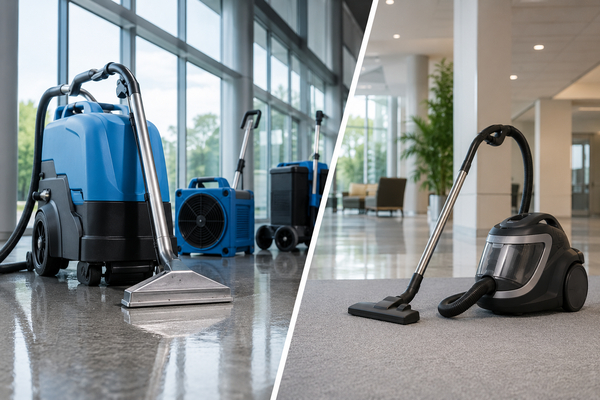
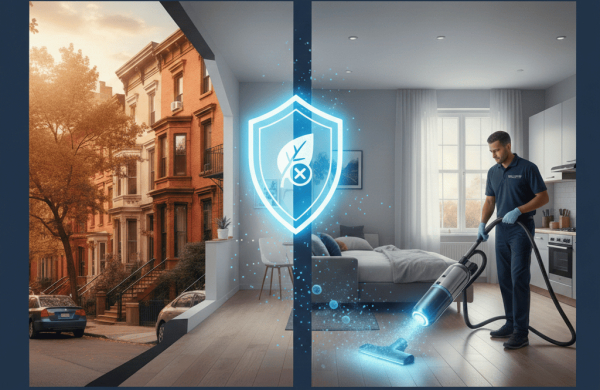
A standard vacuum often does more harm than good for allergy sufferers. Without a sealed HEPA system, a vacuum sucks up large debris but exhausts microscopic allergens back into the air you breathe. HEPA vacuum cleaning is non-negotiable. These filters trap 99.97% of particles as small as 0.3 microns, including pollen, mold spores, and even some bacteria.
Air purifiers
In a Brooklyn bedroom, a standalone air purifier with a carbon filter and HEPA media can cycle the air 4-5 times per hour. This is crucial during peak pollen days when NYC air quality alerts are active.
Tackling pet dander in small spaces
We love our Brooklyn pets, but in a 700-square-foot apartment, pet dander removal becomes a significant challenge. Dander (microscopic skin flakes) is sticky and lightweight, meaning it stays airborne longer than dust.
Soft surface management
Dander embeds itself in carpets, heavy drapes, and upholstered furniture. For Brooklyn pet owners, we recommend:
- Switching to washable slipcovers.
- Steam cleaning area rugs at least once a quarter.
- Using specialized pet-hair attachments during your weekly cleaning routine.
The kitchen and bathroom: The mold connection
NYC apartments are notorious for poor ventilation in "wet" rooms. Mold is a potent allergen that thrives in the humid corners of a Brooklyn bathroom or under a leaky kitchen sink.
Ventilation hygiene
Always use exhaust fans, but more importantly, ensure they are clean. A dust-clogged fan doesn't move air; it just hums. Regularly wiping down bathroom tiles with non-toxic, anti-fungal solutions prevents spores from becoming airborne.
Deep cleaning vs. surface tidying
There is a profound difference between a "tidy" apartment and a "hypoallergenic" one. Most daily cleaning focuses on what we can see. Allergy-proofing focuses on what we can't see.
The vertical dusting method
Dust falls. If you clean your floors but leave the tops of your bookshelves or the blades of your ceiling fans untouched, you haven’t solved the problem. Professional-grade cleaning follows a top-to-bottom logic, ensuring that once an allergen is disturbed, it is captured, not relocated.
Under-furniture accumulation
In small NYC apartments, we often utilize under-bed storage. These "dust bunnies" are actually colonies of dust mites. Moving heavy furniture to clean these "dead zones" is essential for long-term air quality improvement.
Why professional cleaning is a game changer
You can buy the best sprays and wipes, but the equipment and chemicals used by professionals are in a different league.
Industrial-grade steam
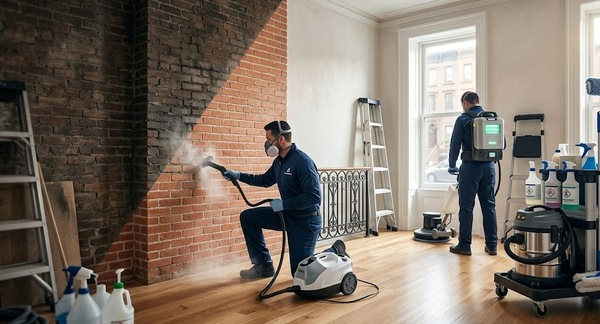
At Presticorp (or your specific service), we use high-temperature steam that kills dust mites and mold spores on contact without the use of harsh volatile organic compounds (VOCs). Traditional cleaners often leave a "clean smell" that is actually chemical vapor—another trigger for allergy sufferers.
Specialized expertise
A professional cleaner knows exactly where Brooklyn apartments hide their secrets: the gaskets of the refrigerator, the fins of the window AC unit, and the crevices of decorative moldings. By outsourcing this task, you ensure a level of "deep clean" that is physically impossible to achieve with standard household tools.
Practical checklist for a cleaner season
To maintain your air quality between professional visits, follow this Brooklyn-specific checklist:
- The "shoes off" rule: NYC sidewalks are a biohazard. Leave your shoes by the door to prevent tracking in lead dust and outdoor allergens.
- Wash linens weekly: Use water at least 130°F (60°C) to kill dust mites.
- AC filter maintenance: If you have a window unit, wash the filter every two weeks during the summer.
- Manage humidity: Keep your apartment humidity between 30% and 50%. Any higher, and you invite mold; any lower, and your nasal passages become irritated.
Breathing easy in the borough
Your home should be the one place where you don't have to worry about the "city grime." While Brooklyn will always be busy and dusty, your apartment doesn't have to be. By combining smart daily habits with regular, high-intensity professional cleaning, you can significantly reduce your allergic load and improve your overall quality of life. Investing in your indoor environment is an investment in your productivity, your sleep, and your health. Don't let seasonal changes dictate how you feel in your own home.
At Brooklyn Community Cleaners, we offer more than just a surface clean. We provide the perfect solution to enjoy impeccable spaces without worries, allowing you to focus on growing your business while we handle the precision. Book your professional cleaning service today and enjoy a clean, fresh, and healthy environment! Contact us today for a free quote and discover how BKCC can help you create a healthier and more pleasant workplace.
Book your professional cleaning service here: Contact us today for a free quote!
Comment