-(1).png)

Regular vs. deep cleaning Brooklyn: Which service your home actually Needs (2026 guide)
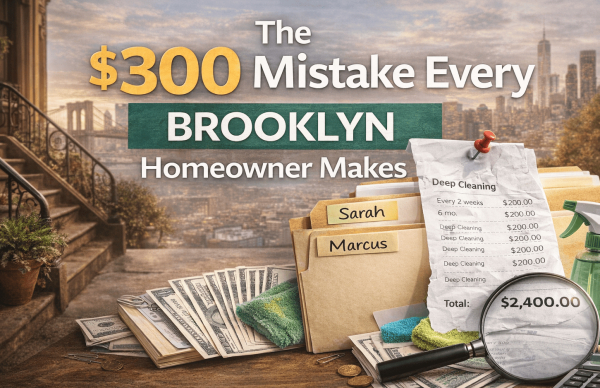
The $300 Mistake Every Brooklyn Homeowner Makes. Sarah, a Park Slope resident, called us last month frustrated. She'd been paying for "deep cleaning" every two weeks for six months—spending nearly $2,400 on services her 800-square-foot apartment didn't actually need. Meanwhile, Marcus in Bed-Stuy waited eight months between professional cleanings, then wondered why his "regular" service couldn't remove the built-up grease in his vintage kitchen.
Both made the same error: They didn't understand the fundamental difference between regular cleaning and deep cleaning.
In Brooklyn's competitive cleaning market, knowing which service you need isn't just about saving money—it's about protecting your security deposit, maintaining your health, and preserving the value of your home in one of America's most expensive real estate markets.
This comprehensive guide breaks down exactly what separates these services, when each is necessary, and how Brooklyn's unique housing stock (pre-war apartments, brownstones, new developments) affects your cleaning needs.
-(1)-0303125058.png)
Part 1: Defining the services (what you're actually paying for)
Regular cleaning: Maintenance mode
Regular cleaning—often called "maintenance cleaning" or "standard cleaning"—is exactly what it sounds like: routine upkeep to maintain a baseline level of cleanliness. Think of it as hitting "refresh" rather than "restore."
What regular cleaning includes:
- Dusting accessible surfaces (tables, countertops, shelves)
- Vacuuming and mopping floors
- Cleaning bathrooms (toilet, sink, shower/tub surfaces, mirrors)
- Kitchen surfaces (countertops, stovetop, sink, appliance exteriors)
- Emptying trash and light organizing
- Changing bed linens (if requested)
Time investment: Typically 2-3 hours for a 1-2 bedroom Brooklyn apartment
Frequency: Weekly, bi-weekly, or monthly
Cost range in Brooklyn: $120-$180 per visit (varies by square footage and specific neighborhood)
Deep cleaning: Restoration mode
Deep cleaning is corrective and comprehensive. It addresses accumulated dirt, grime, and bacteria that regular cleaning can't touch—especially critical in Brooklyn's older housing stock where decades of buildup hide in corners.
What deep cleaning includes (everything in regular cleaning, plus):
- Inside appliances (oven, refrigerator, microwave)
- Behind and under furniture
- Baseboards, door frames, and window sills
- Light fixtures and ceiling fans
- Grout scrubbing and tile restoration
- Inside cabinets and drawers
- Under sink areas and plumbing fixtures
- Wall spot-cleaning
- Detailed dusting of blinds, vents, and high surfaces
- Scale and soap scum removal from bathrooms
Time investment: 4-8 hours depending on home condition and size
Frequency: Every 3-6 months, or for specific events (move-in/move-out, post-renovation, seasonal)
Cost range in Brooklyn: $250-$450+ per visit
Part 2: The science of soil accumulation (why timing matters)
Brooklyn homes face unique cleaning challenges:
Pre-war apartments (built 1900-1945): Original hardwood floors with decades of polish buildup, cast-iron radiators that trap dust, and plaster walls that shed particles. These homes need deep cleaning every 3-4 months to prevent allergen accumulation.
Post-war buildings (1945-1990): Smaller windows, less ventilation, and often original bathrooms with porous tile. Deep cleaning every 4-5 months prevents mold and mildew in humid Brooklyn summers.
New developments (2000+): Open floor plans accumulate dust faster. However, modern materials are easier to clean—deep cleaning every 6 months is typically sufficient unless you have pets or children.
The hidden cost of waiting too long: When you postpone deep cleaning, soil bonds with surfaces. Grease polymerizes on kitchen cabinets. Soap scum etches into glass shower doors. Dust compacts into carpet fibers. Eventually, only restoration-level cleaning (significantly more expensive than deep cleaning) can reverse the damage.
Part 3: Decision Framework—Which Service Do You Actually Need?
Choose regular cleaning If:
- Your home was professionally cleaned within the last month
- You maintain basic tidiness between visits (dishes done, clutter minimal)
- No major life events have occurred (renovations, moves, illness)
- You're satisfied with surface-level cleanliness
- You have a consistent schedule that prevents buildup
Best for: Busy professionals, empty nesters, minimalists, homes with regular cleaning maintenance
Choose deep cleaning if:
- It's been 3+ months since your last professional cleaning
- You're moving in or out (security deposit protection)
- You've completed renovations (construction dust is invasive)
- You're hosting a major event or have holiday guests arriving
- Someone in your home has allergies, asthma, or compromised immunity
- You notice persistent odors, sticky surfaces, or visible grime in "hidden" areas
- You're starting with a new cleaning service (establishes baseline)
Best for: Families with young children, pet owners, post-renovation situations, seasonal refreshes, new service onboarding
Still unsure which service fits your Brooklyn home?
Book a free 10-minute assessment call
We'll ask five quick questions about your space and recommend the exact service level you need (no upselling, promise).
Part 4: Brooklyn-specific considerations
The "Brooklyn Brownstone" Factor
Historic brownstones present unique deep cleaning challenges:
Original woodwork: Requires specialized products to avoid damaging century-old finishes
Multiple levels: Deep cleaning a 3-4 story home takes 6-10 hours vs. 4-6 for a standard apartment
Fireplaces: Soot removal requires specific techniques not included in regular cleaning
Basement units:Higher humidity means mold prevention is critical
Recommendation: Brownstone owners should schedule deep cleaning every 3 months, with quarterly fireplace maintenance.
The "small space, big sity" paradox
Brooklyn's compact apartments (average 700 sq ft for 1-bedrooms) accumulate dirt faster than suburban homes:
- Less ventilation = more airborne particle settlement
- Higher foot traffic per square foot
- Proximity to busy streets = more exterior dust infiltration
Counterintuitive insight: Small Brooklyn apartments often need deep cleaning more frequently than large suburban homes, not less.
The Pet Multiplier
Brooklyn's dog-friendly culture means fur, dander, and paw-borne contaminants:
- Pet owners should add 25% to deep cleaning frequency
- "Regular" cleaning for pet homes = what "deep" cleaning is for pet-free homes
- Consider monthly deep cleaning during shedding seasons (spring/fall)
Part 5: Cost analysis—when "saving money" costs more
Let's compare two approaches over one year for a typical 2-bedroom Brooklyn apartment:
Scenario A: "cheaper" regular cleaning only
Bi-weekly regular cleaning: $150 × 26 = $3,900/year
Result: Surface looks clean, but hidden grime accumulates
Year-end deep cleaning required to restore: $350
Total: $4,250
Hidden costs: Potential security deposit loss ($500-$2,000), shortened appliance lifespan, allergy medication
Scenario B: Strategic Combination
Bi-weekly regular cleaning: $150 × 20 = $3,000 (skip 6 sessions)
Quarterly deep cleaning: $300 × 4 = $1,200
Total: $4,200
Benefits: Consistently restored environment, protected deposits, longer-lasting appliances, better health outcomes
The math: Strategic deep cleaning actually costs *less* while delivering superior results.
Part 6: Red flags—when a "deep clean" isn't deep
Unfortunately, Brooklyn's unregulated cleaning industry means some services charge deep cleaning prices for regular cleaning scope.
Watch for:
- Time estimates under 3 hours for any apartment over 600 sq ft
- No mention of inside appliances in the service description
- Pricing significantly below market (often indicates corner-cutting)
- Vague task lists ("we'll clean everything" without specifics)
- No satisfaction guarantee or re-cleaning policy
The BKCC standard: We provide itemized checklists for both service levels. Our deep cleaning includes 47 distinct tasks vs. 22 for regular cleaning. You know exactly what you're paying for.
Tired of guessing what your cleaning service actually includes?
Check out our list of services and pricing
Point list our teams use in Park Slope, Williamsburg, and Bed-Stuy homes. Compare it to your current service (or use it to DIY).
Part 7: Seasonal strategy—the Brooklyn cleaning calendar
Spring (March-May): The reset
- Deep clean focus: Windows (Brooklyn's winter grime), curtains, air vents
- Why: Allergen removal before open-window season
- Frequency: Comprehensive deep clean + regular maintenance
Summer (June-August): The maintenance
- Deep clean focus: Mold prevention in bathrooms, refrigerator deep clean
- Why: Humidity control, higher foot traffic from outdoor activities
- Frequency: Regular cleaning with targeted deep clean of high-moisture areas
Fall (September-November): The preparation
- Deep clean focus: Pre-holiday restoration, fireplace prep, guest-ready spaces
- Why: Entertaining season, closing windows for winter
- Frequency: Full deep clean before Thanksgiving
Winter (December-February): The preservation
- Deep clean focus: Post-holiday restoration, salt and sludge removal
- Why: Brooklyn's streets deposit unique winter grime
- Frequency: Regular cleaning with quarterly deep clean
Part 8: Special Situations Requiring Immediate Deep Cleaning
Move-in/move-out cleaning
Brooklyn's rental market is brutal on security deposits. Landlords inspect with flashlights. Standard deep cleaning isn't enough—you need:
- Inside all cabinets and closets
- Behind appliances (refrigerator, stove)
- Window tracks and sills
- Light switch plates and door handles
- Baseboards and crown molding
Pro tip: Schedule move-out deep cleaning *before* your final walkthrough, not after. Photograph everything.
Post-renovation cleaning
Construction dust is microscopic and invasive. It settles in:
- HVAC systems
- Inside closed cabinets
- Under floorboards
- Textured walls and ceilings
Regular cleaning cannot remove construction dust. Attempting it spreads particles rather than eliminating them. Always hire specialized post-renovation deep cleaning with HEPA filtration.
Post-illness sanitization
After contagious illness (flu, COVID, stomach viruses), deep cleaning with disinfectant focus protects household members. This goes beyond standard deep cleaning to include:
- High-touch surface sanitization
- Soft surface treatment (upholstery, mattresses)
- Air quality improvement
Part 9: The DIY Deep Cleaning Reality Check
Can you deep clean yourself? Absolutely. Should you? Consider:
Time investment: 8-12 hours for a thorough Brooklyn apartment deep clean
Equipment needed: Industrial-grade vacuum, steam cleaner, extension dusters, specialized grout brushes, ladder ($300+ investment)
Product knowledge: Which solutions damage marble vs. granite vs. quartz? What removes hard water stains without etching glass?
Physical demands: Kneeling for grout, reaching high shelves, moving heavy furniture
The break-even analysis: If your time is worth more than $25/hour, professional deep cleaning pays for itself. Plus, professionals complete in 4 hours what takes homeowners 10+ hours.
Ready to restore your Brooklyn home without the 10-hour weekend marathon?
Schedule your deep cleaning
Available this week in Park Slope, Windsor Terrace, Bed-Stuy, and surrounding neighborhoods.
First-time clients receive 15% off when booking both regular and deep cleaning services together.
The confidence to choose correctly
Understanding regular vs. deep cleaning isn't about industry jargon—it's about **making informed decisions that protect your home, health, and wallet.**
Remember:
- Regular cleaning maintains. Schedule it consistently (weekly to monthly) to prevent chaos.
- Deep cleaning restores. Schedule it strategically (quarterly to semi-annually) to address accumulation.
- Brooklyn's unique housing demands more frequent deep cleaning than national averages suggest.
- The cheapest option often costs more long-term through damaged surfaces, lost deposits, and health impacts.
Your home is likely your largest investment. Treat its maintenance accordingly.
Ready to experience the science of clean in your home?
At Brooklyn Community Cleaners, we offer more than just a surface clean. We provide the perfect solution to enjoy impeccable spaces without worries, allowing you to focus on growing your business while we handle the precision. Book your professional cleaning service today and enjoy a clean, fresh, and healthy environment! Contact us today for a free quote and discover how BKCC can help you create a healthier and more pleasant workplace.
Schedule your free in-home health assessment today ? Contact us today for a free quote!
Brooklyn Community Cleaners applies evidence-based protocols to every service. Because your family deserves cleaning that works as smart as it looks.
-
-
-
-
-
-
-
-
-
-
-
-
-
-
-
-
-
Sources and References
1. **American Cleaning Institute** (2024). *Cleaning Industry Research: Residential Service Standards and Consumer Expectations*. Washington, DC.
2. **Environmental Protection Agency (EPA)** (2023). *Indoor Air Quality in Urban Environments: Impact of Cleaning Frequency on Particulate Matter*. EPA Report 600/R-23/156.
3. **National Apartment Association** (2024). *Security Deposit Retention Study: Cleanliness as Primary Deduction Factor*. NAA Survey Data.
4. **New York City Department of Health and Mental Hygiene** (2023). *Guidelines for Residential Cleaning and Sanitization in Multi-Unit Dwellings*.
5. **Brooklyn Real Estate Board** (2024). *Rental Market Report: Average Security Deposits and Common Deductions by Neighborhood*.
6. **Journal of Environmental Health** (2023). "Impact of Professional vs. DIY Deep Cleaning on Indoor Allergen Levels." *JEH*, 85(4), 22-31.
7. **Institute of Inspection Cleaning and Restoration Certification (IICRC)** (2024). *Standards for Residential Cleaning: S100 Reference Guide*.
8. **Brooklyn Community Cleaners Internal Data** (2024). *Service Frequency Analysis: 2,400+ Brooklyn Homes, 2019-2024*.
9. **Centers for Disease Control and Prevention (CDC)** (2023). *Cleaning and Disinfecting Your Home: Guidelines for Post-Illness Sanitization*.
10. **Consumer Reports** (2024). *Home Appliance Longevity: Impact of Maintenance Cleaning on Lifespan and Efficiency*.
Comment