
-(1).png)

-(1).png?rand=2026-09-20 12:21:10)
Hardwood floor care in historic Brooklyn Brownstones: Dos and don’ts
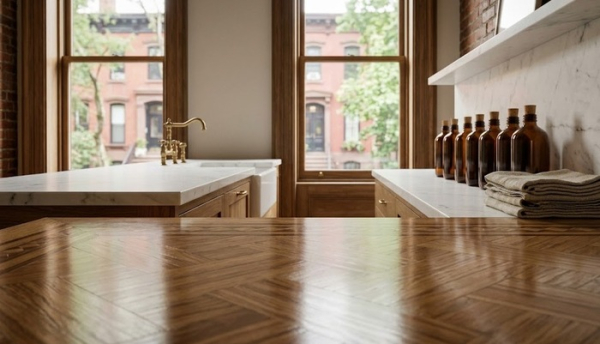
Owning a historic Brownstone in neighborhoods like Park Slope, Bedford-Stuyvesant, or Brooklyn Heights is like being a curator of a living museum. Among the most coveted original features of these 19th-century treasures are the hardwood floors. From intricate parquet and mahogany borders to wide-plank pumpkin pine, these floors have survived over a century of Brooklyn history.
However, historic wood is not the same as modern laminate. It breathes, it moves, and it requires a specialized touch. At Brooklyn Community Cleaners (BKCC), as a worker-owned cooperative, we treat these floors with the surgical attention to detail they deserve. Here is the definitive guide on the dos and don’ts of maintaining your Brooklyn Brownstone’s original hardwood floors.
Understanding the "historic" difference
Before you grab a mop, you must understand what you are standing on. Most historic Brownstones feature:
- Old-growth wood: Denser and more durable than modern lumber, but often finished with shellac or wax rather than modern polyurethane.
- Intricate inlays: Delicate patterns that can be easily damaged by excessive moisture.
- Subfloor movement: Historic homes "settle," creating small gaps between planks where dust and liquids can settle.
The DOs of Brownstone floor care
DO Use the "Dry First" Method
The biggest enemy of historic wood is grit. In Brooklyn, soot and street dust are constant visitors. Small particles of sand act like sandpaper under your feet, grinding down the finish.
- Action: Vacuum with a soft-brush attachment or use a high-quality microfiber dust mop daily. Avoid vacuum beaters that can scratch the surface.
DO Maintain Humidity Control
Brooklyn’s climate swings from humid summers to bone-dry, radiator-heated winters.
Why: Wood expands and contracts. Extreme dryness causes planks to shrink and crack, while high humidity can cause "cupping."
- Action: Use a humidifier in the winter to keep levels around 35-50%. Your floors (y su salud) will thank you.
DO Use pH-neutral cleaners
Avoid the "supermarket specials."
- Action: Only use cleaners specifically formulated for hardwood. At BKCC, we prioritize eco-friendly, pH-neutral solutions that break down grime without stripping the delicate oils or waxes of historic wood.
DO Protect high-traffic zones
The hallway leading from the "stoop" is the most vulnerable area.
- Action: Use breathable area rugs with non-rubber pads. Rubber backings can trap moisture and cause a chemical reaction that discolors the wood finish.
The DON’Ts (Common mistakes that ruin history)
DON’T use steam mops
This is the #1 cause of modern damage to historic floors.
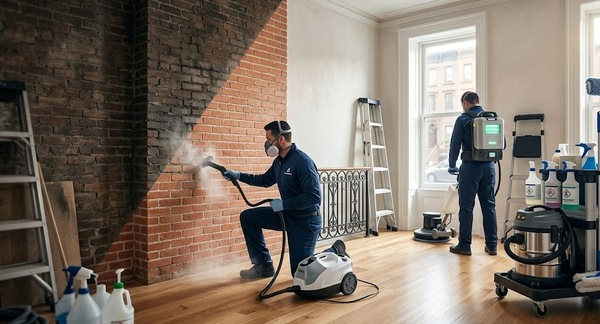
- The danger: Steam forces moisture deep into the wood fibers and under the finish. In a Brownstone, this can cause the ancient adhesive of parquet floors to fail, leading to loose pieces and permanent warping.
DON’T use vinegar or ammonia
Many "DIY" blogs suggest vinegar and water. Stop.
The Danger: Vinegar is an acid. Over time, it dulls the finish and eats away at the wood’s natural cellular structure, leaving it looking "dead" and gray.
DON’T "wet mop" with a bucket
Sloshing water onto a 120-year-old floor is a recipe for disaster.
- The danger: Water seeps into the cracks between the planks, causing the subfloor to rot or the planks to swell.
- Action: Use a damp (not dripping) microfiber cloth or mop. If you see a puddle, you’ve used too much water.
DON’T ignore scratches
A deep scratch in a Brownstone floor isn't just an eyesore; it’s an opening for moisture to enter the raw wood.
- Action: Address deep gouges immediately with a professional touch-up kit or consult a refinishing specialist.
The BKCC professional standard for wood care
As a worker-owned cooperative, our members don't just "wipe down" your home. We understand the responsibility of maintaining Brooklyn’s architectural heritage. Our approach to hardwood includes:
- Surgical dusting: We focus on the corners and gaps where Brooklyn "grime" hides.
- Eco-friendly integrity: We use products that are safe for your family, your pets, and your 100-year-old mahogany.
- Accountability: Because every cleaner is a part-owner, we treat your floors as if they were in our own homes.
When to call the professionals?
If your floors look "cloudy," have deep "alligator" cracking in the finish, or if the wood feels splintery, it may be time for a professional refinishing.
However, daily and weekly maintenance is what prevents the need for expensive sanding. Sanding a historic floor can only be done a limited number of times before the wood becomes too thin. Preservation through proper cleaning is always the better investment.
Summary table: Quick reference for Brownstone owners
Feature | The DO | The DON'T |
|---|---|---|
Daily cleaning | Microfiber dust mop | Vacuum with beater bar |
Spills | Blot immediately with dry cloth | Let it air dry |
Deep cleaning | pH-neutral wood soap | Steam mop or Vinegar |
Rugs | Felt or breathable pads | Rubber or latex backing |
Furniture | Felt pads on all legs | Dragging across the floor |
Reclaim your weekend (and your floors)
Maintaining a Brownstone is a second job. Why spend your Saturday scrubbing floors when you could be enjoying Prospect Park?
At Brooklyn Community Cleaners, we take over the facility management of your home or office with the precision of owners. We understand the "Brooklyn Grime" and we know how to beat it without damaging your home's history.
Ready to see the "Ownership Difference"? BOOK A PROFESSIONAL ASSESSMENT NOW
Comment