-(1).png)

-(1).png?rand=2026-09-20 12:21:11)
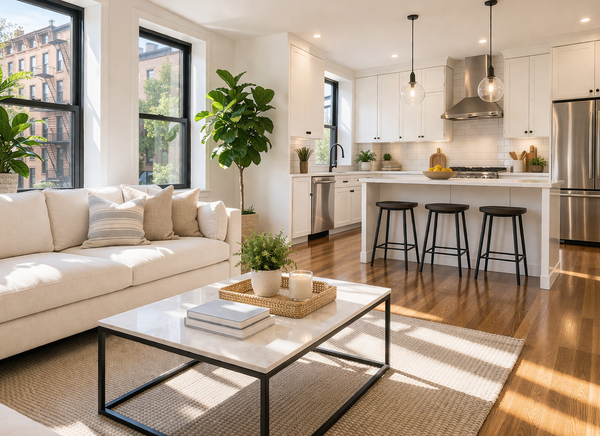
Brooklyn family living: Clean homes, happy families
Why Park Slope families choose community over chaos. There's something unmistakable about a Park Slope morning. The way sunlight filters through century-old oak trees on Prospect Park West. The sound of children's laughter echoing from the playgrounds near the Long Meadow. The familiar nod between neighbors grabbing coffee at Gorilla Coffee on Fifth Avenue before the school run.
This is Brooklyn's most beloved family neighborhood—and it's not hard to understand why.
With a median household income of $169,544 and 63.3% of residents renting their homes, Park Slope attracts professionals who've made a deliberate choice: they want urban convenience without sacrificing community warmth . They want brownstone charm with modern amenities. They want their children to grow up knowing their neighbors, not just coexisting with strangers in elevator buildings.
But here's the reality that doesn't make it into the real estate brochures: maintaining a Park Slope brownstone or pre-war apartment while working full-time and raising children is a logistical puzzle that would challenge even the most organized parent.
The average Park Slope household has 2.3 residents squeezed into 790 square feet for one-bedrooms or 1,177 square feet for two-bedrooms . Space is at a premium. Time is scarcer still. And the expectations—for work, for parenting, for home maintenance—never seem to stop expanding.
This is where the modern Park Slope family faces a critical decision: how to maintain the beautiful home they've invested in without sacrificing the family time and neighborhood engagement that drew them here in the first place.
Beyond Park Slope: Carroll Gardens, Windsor Terrace and Brooklyn's family belt
While Park Slope often steals the spotlight, savvy Brooklyn families know that some of the borough's best-kept secrets lie just beyond its borders. These neighborhoods offer similar community fabric with slightly different flavors—and often, slightly more breathing room.
Carroll Gardens: The Village within the city
Walk down Court Street on a Saturday morning and you'll understand immediately. Italian bakeries that have served the same families for three generations. Butchers who know your order before you open your mouth. The sense that you've stepped into a small town that just happens to be twenty minutes from Manhattan.
Carroll Gardens shares Park Slope's brownstone architecture and tree-lined streets but with a more intimate scale. The neighborhood's Italian-American heritage lingers in the storefronts and the community gatherings, creating a sense of continuity that newer residents find irresistible.
For families, the draw is obvious: top-rated schools like P.S. 58, the Carroll Park playground that serves as an unofficial community center, and housing stock that often includes those coveted extra bedrooms or outdoor spaces that Park Slope prices have pushed out of reach.
Windsor Terrace: The quiet alternative
If Park Slope is Brooklyn's star and Carroll Gardens its charming neighbor, Windsor Terrace is the neighborhood that locals try to keep secret. Sandwiched between Prospect Park and Green-Wood Cemetery, this slender enclave feels worlds away from the bustle of Fifth Avenue.
Windsor Terrace families trade the restaurant density of Park Slope for something arguably more valuable: proximity to the Prospect Park Parade Ground, the Brooklyn Botanic Garden, and the kind of front-porch community where you actually know the names of every dog on your block.
The housing stock here mixes pre-war co-ops, single-family homes, and the occasional new construction—often at prices that, while still steep by national standards, offer more space per dollar than Park Slope proper.
Prospect heights and Brooklyn heights: Urban sophistication
For families who want Brooklyn community with even closer Manhattan access, Prospect Heights and Brooklyn Heights offer compelling alternatives. Prospect Heights brings you the Brooklyn Museum, the Brooklyn Public Library, and the Barclays Center—all within walking distance of residential streets that have maintained their human scale.
Brooklyn Heights, meanwhile, offers the promenade, the views, and the most established prestige in outer-borough living. It's where you find families who've been in Brooklyn for generations alongside recent arrivals drawn by the excellent public schools and the undeniable cachet of the Heights.
What unites all these neighborhoods—Park Slope, Carroll Gardens, Windsor Terrace, Prospect Heights, Brooklyn Heights—is a common challenge. These are communities where people invest deeply in their homes. Where original hardwood floors, vintage tile bathrooms, and pre-war architectural details aren't bugs but features. Where the standard for "clean" isn't just "tidy" but "preserved," "maintained," "cherished."
And where the time required to meet that standard is time that most families simply don't have.
The Brooklyn family cleaning dilemma: Three common approaches
Every family in these neighborhoods eventually confronts the same question: who cleans, how, and when? The answers fall into three broad categories—each with significant drawbacks.
The DIY weekend warrior
This is the default for many families when they first arrive in Brooklyn. Saturday mornings become dedicated cleaning sessions. Parents divide tasks while children are shuffled between activities or, if old enough, assigned age-appropriate chores. The brownstone gets its weekly maintenance, the apartment its surface-level tidy.
The problem? By Sunday evening, the parents are exhausted, the children are restless, and the "weekend" has felt like an extension of the workweek. The 2024 trend toward "weekend recovery" rather than "weekend productivity" has made this approach increasingly unsustainable for knowledge workers who need genuine downtime to perform during the week .
-0227085348.png)
The gig economy cleaner
Platforms like TaskRabbit and Handy offer apparent convenience: book a cleaner for a specific time, pay through the app, no ongoing commitment. For busy families, this seems like the perfect solution.
The reality is more complicated. Different cleaner every week means no accumulated knowledge of your home's quirks. No understanding of which window sticks, which radiator hisses, which corner collects moisture. No relationship of trust that allows you to leave valuables out, to give keys, to stop supervising the cleaning process itself.
And the turnover is relentless. The gig economy cleaner who was excellent last month has moved on to a different platform, a different city, a different career. You're back to square one: explaining your home, your preferences, your priorities to someone new.
The invisible burden
Perhaps the most common approach in progressive Brooklyn families is the unequal distribution of domestic labor. Despite best intentions and explicit commitments to equity, research consistently shows that women in heterosexual partnerships still perform disproportionate household management—including the mental load of noticing what needs cleaning, scheduling when it happens, and ensuring standards are met .
This "invisible burden" creates resentment that corrodes relationship satisfaction and family harmony. It's not about the cleaning itself; it's about the constant low-grade anxiety of home maintenance that never quite leaves the mental to-do list.
-(1)-0227085808.png)
The professional difference
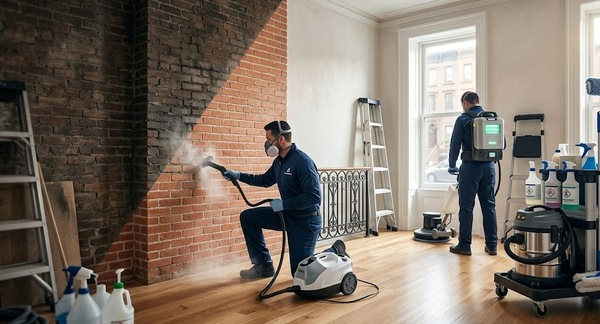
Professional cleaning services that specialize in Brooklyn's pre-war housing stock bring expertise that DIY efforts and gig workers simply can't match. They understand that radiator covers need to be removed and cleaned separately. That hardwood floors require pH-neutral products, never vinegar on unsealed wood. That vintage bathroom tile needs gentle, consistent maintenance rather than aggressive scrubbing.
More importantly, they bring consistency. The same cleaner, every time. Someone who learns your home's rhythms, your family's preferences, your pet's hiding spots. This consistency transforms cleaning from a transactional service into a genuine relationship—one built on trust and accumulated knowledge.
The values alignment
Brooklyn families, particularly in neighborhoods like Park Slope and Carroll Gardens, care deeply about how services align with their values. They want to know that workers are paid fairly, treated respectfully, given stable employment rather than exploitative gig arrangements.
The 2024 shift toward "conscious consumerism" in home services reflects this priority. Families increasingly ask: Who cleans my home? Under what conditions? With what products? The answers matter as much as the results .
The environmental imperative
Chemical-free cleaning isn't a luxury preference for Brooklyn families—it's often a health necessity. With asthma rates higher in urban environments, with children crawling on floors and pets tracking outdoor contaminants indoors, the products used in home cleaning have direct health implications.
Professional services that use vinegar, baking soda, castile soap, and essential oils rather than ammonia, bleach, and synthetic fragrances address these concerns directly. They provide clean homes without the chemical residue that conventional products leave behind .
-0227084802.png)
Prospect Park becomes your backyard
Families with cleaned homes and free Saturdays don't just visit Prospect Park—they inhabit it. Morning runs around the loop. Afternoons at the zoo or the carousel. Picnics on the Long Meadow that stretch into evening. The park that drew so many families to these neighborhoods becomes truly accessible, not just theoretically nearby.
Community engagement deepens
Free weekends mean participation in the community institutions that make these neighborhoods special. The Brooklyn Public Library branch on Grand Army Plaza. The weekend farmers markets on Grand Army Plaza and in Carroll Gardens. The community gatherings, school events, and neighborhood associations that transform a collection of residences into a genuine community.
Family connection strengthens. Perhaps most importantly, reclaimed weekend time allows for the unstructured family connection that busy weekdays preclude. Board games in brownstone living rooms. Cooking projects in kitchens that are clean to start with. The simple luxury of being together without the background anxiety of chores undone.
Making the choice: Questions for Brooklyn families
If you're a Park Slope, Carroll Gardens, Windsor Terrace, or neighboring family considering professional cleaning, several questions can guide your decision:
What's your actual weekend time worth? Calculate not just the hours spent cleaning, but the recovery time needed afterward, the resentment generated by unequal distribution, the activities foregone.
What are you risking with inconsistent cleaning? Pre-war Brooklyn homes require maintenance. Deferred cleaning becomes deferred maintenance becomes costly repairs. Original hardwood floors, vintage tile, original fixtures—these are assets that appreciate with care and depreciate with neglect. What values do you want your spending to reflect? Fair wages for workers? Environmental sustainability? Community investment? The cleaning service you choose can embody—or contradict—these priorities. What's the cost of not deciding? The status quo has costs too: stress, relationship strain, deteriorating home condition, missed opportunities for family time and community engagement.
Home as foundation, not burden
The families who thrive in Park Slope, Carroll Gardens, Windsor Terrace, and Brooklyn's other great neighborhoods understand something essential: a home should be a foundation for the life you want to live, not a burden that consumes that life. Professional, consistent, values-aligned cleaning isn't an indulgence. It's a strategic decision that protects your investment in your home, your relationships, and your community. It transforms weekends from recovery periods into genuine opportunities for connection, growth, and joy.
For Brooklyn families who've already made so many intentional choices—about neighborhood, about schools, about community—it's the choice that makes all the others sustainable. Schedule your free in-home health assessment today ? Contact us today for a free quote!
Brooklyn Community Cleaners applies evidence-based protocols to every service. Because your family deserves cleaning that works as smart as it looks.
-
-
-
-
-
-
-
Sources:
: Homes.com. (2025). "About Park Slope | Schools, Demographics, Things to Do." Retrieved from https://www.homes.com/local-guide/brooklyn-ny/park-slope-neighborhood/
: Perfection Professionals. (2024). "The Future of Cleaning: Sustainable Practices You Can Implement in 2024." Retrieved from https://blog.perfectionprofessionals.com/2024/11/07/the-future-of-cleaning-sustainable-practices-you-can-implement-in-2024/
: Barentz North America. (2024). "Top 6 Cleaning Product Trends in the US for 2024." Retrieved from https://www.barentz-na.com/en/us/hii/Blog/2024-cleaning-trends
: Distinct Cleaning Services. (2024). "Steady Green: Green Cleaning Updates of 2024." Retrieved from https://www.distinctcleaningusa.com/blog/q51kqpk48emsp6xcn5gkg66553rocy
: Brooklyn Bridge Parents. (2024). "Neighborhood data for Brooklyn – household income, family households, age, race and more for our neighborhoods." Retrieved from https://brooklynbridgeparents.com/neighborhood-data-for-brooklyn-household-income-family-households-age-race-and-more-for-our-neighborhoods/
: Baron Chemical. (2024). "Emerging Cleaning Trends for 2024: Discover The Latest Innovations in Cleaning Products and Techniques." Retrieved from https://baronchemical.com/emerging-cleaning-trends-for-2024-discover-the-latest-innovations-in-cleaning-products-and-techniques
K2.5
Comment